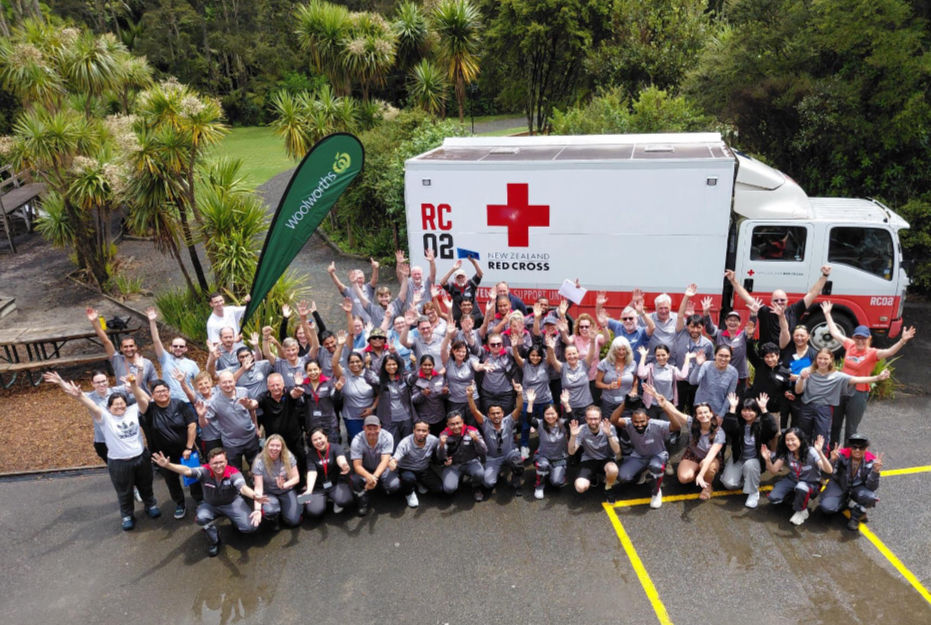
Leading on the ground along the Whangaruru coast: DWST squad leader activation

In late January I deployed as a Squad Leader with the Disaster Welfare and Support Team (DWST) to support communities along the Whangaruru coast affected by severe flooding and slips. It was part of an innovative recovery model designed to bring support services to the people, rather than waiting for people to come to them.
The recovery programme began with a community hui at Mōkau Marae, where agencies from across civil defence, health, education, social development and Red Cross came together to listen, and share information with local residents. From there, recovery drop-in hubs were held at multiple marae and community centres, creating culturally grounded spaces for whānau to connect with support staff and agencies directly.
Key Insights & Opportunities
1. Locating support in existing community spaces matters
Holding recovery conversations at marae and local community hubs meant support was available in places people already gather and trust. This reduced the burden on individuals to seek out agencies and allowed engagement to occur in ways that felt familiar and informal.
2. Marae provided an appropriate setting for recovery conversations
Working alongside marae offered a culturally grounded environment where whānau could engage on their own terms. The setting supported a wide range of interactions, from practical questions to quieter, reflective conversations, without forcing people into formal or clinical processes.
3. On-the-ground leadership supports both volunteers and communities
Having consistent field leadership helped new volunteers navigate complex situations with care and confidence. This allowed the team to remain responsive, coordinated, and focused on listening rather than rushing to solutions.
4. Recovery conversations benefit from time and presence
Face-to-face engagement allowed people to share concerns in their own words and at their own pace. Many insights emerged through conversation rather than direct requests, highlighting the value of simply being present during early and mid-stage recovery.
Looking Forward
This first-of-its-kind recovery approach, bringing services directly into storm-affected communities, shows promise in identifying unmet needs early, strengthening agency coordination, and creating spaces where people feel heard and supported.
The value of this approach will depend on sustained agency follow-through, ensuring that what was heard in community spaces translates into action.